Competitive functioning of the agricultural equipment sector: the Autorité de la concurrence issues its opinion to the Economic Affairs Committee of the French Senate
The Autorité de la concurrence was asked by the Economic Affairs Committee of the French Senate for an opinion on the competitive functioning of the agricultural equipment sector.
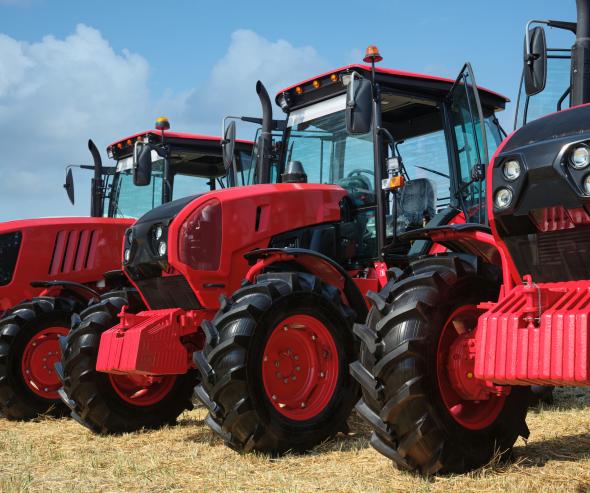
As this sector encompasses a wide range of equipment, the Autorité focused its analysis on tractors. In 2022, tractors accounted for 40% of the agricultural equipment sector’s turnover and, more broadly, represent a significant share of farm production costs. Moreover, in value terms, they are the main category of agricultural equipment produced in France.
Firstly, the Autorité has observed a rise in tractor prices in recent years. While this rise reflects a broader inflationary context, it may also be attributable to other sector-specific factors, such as farmers’ growing needs (notably in terms of tractor power and connected services) and the adoption of new standards.
In addition, given the potentially inflationary nature of certain purchase incentives (such as subsidies or tax measures), the Autorité considers it essential that, if such measures are applied to tractors, their impact is carefully assessed, firstly by reviewing the effects of previously introduced mechanisms, and then by carrying out a prior impact study based on precise quantitative data.
Secondly, the Autorité wishes to draw operators’ attention to a number of competition-related issues in both the upstream and downstream tractor markets.
- Upstream, the market for the manufacture and marketing of tractors is oligopolistic, with a high degree of concentration around four main players. It is characterised by high barriers to entry and a level of transparency that calls for particular vigilance with regard to the risk of exchanges of commercially sensitive information.
- Downstream, in the tractor distribution and repair markets, competition is primarily inter-brand, given the territorial exclusivity clauses granted to dealers of a given brand, which restrict intra-brand competition. Inter-brand competition in tractor distribution appears relatively satisfactory, insofar as the main manufacturers’ networks cover most of France. However, in certain areas, the range of offers available to end consumers may still be very limited.
In the related tractor repair market, consumer choice is significantly reduced by the competitive advantage enjoyed by authorised network dealers, combined with territorial exclusivity clauses.
The Autorité therefore considers that inter-brand competition alone in the distribution and repair markets does not always guarantee a sufficiently diverse offering for end consumers and that intra-brand competition should be strengthened in order to broaden farmers’ scope for choice and comparison.
Accordingly, the Autorité invites manufacturers to clarify certain clauses in their dealer agreements and to ensure that distributors are fully informed of their rights and obligations, in particular with regard to passive sales. Manufacturers should also take care not to introduce obligations that could reinforce any economic dependence of their dealers.