Pay TV and the acquisition and broadcast of cinematographic works: the General Rapporteur of the Autorité de la concurrence has notified objections concerning abuse of a dominant position

The General Rapporteur of the Autorité de la concurrence has notified objections in the sector of pay TV and the acquisition and broadcast of cinematographic works.
The objections concern abuse of a dominant position in the sector of pay TV and the acquisition and broadcast of cinematographic works through the imposition of unfair trading conditions.
The statement of objections is part of the ex officio investigation opened by the Autorité on 25 September 2024 into potential anticompetitive practices in the sector.
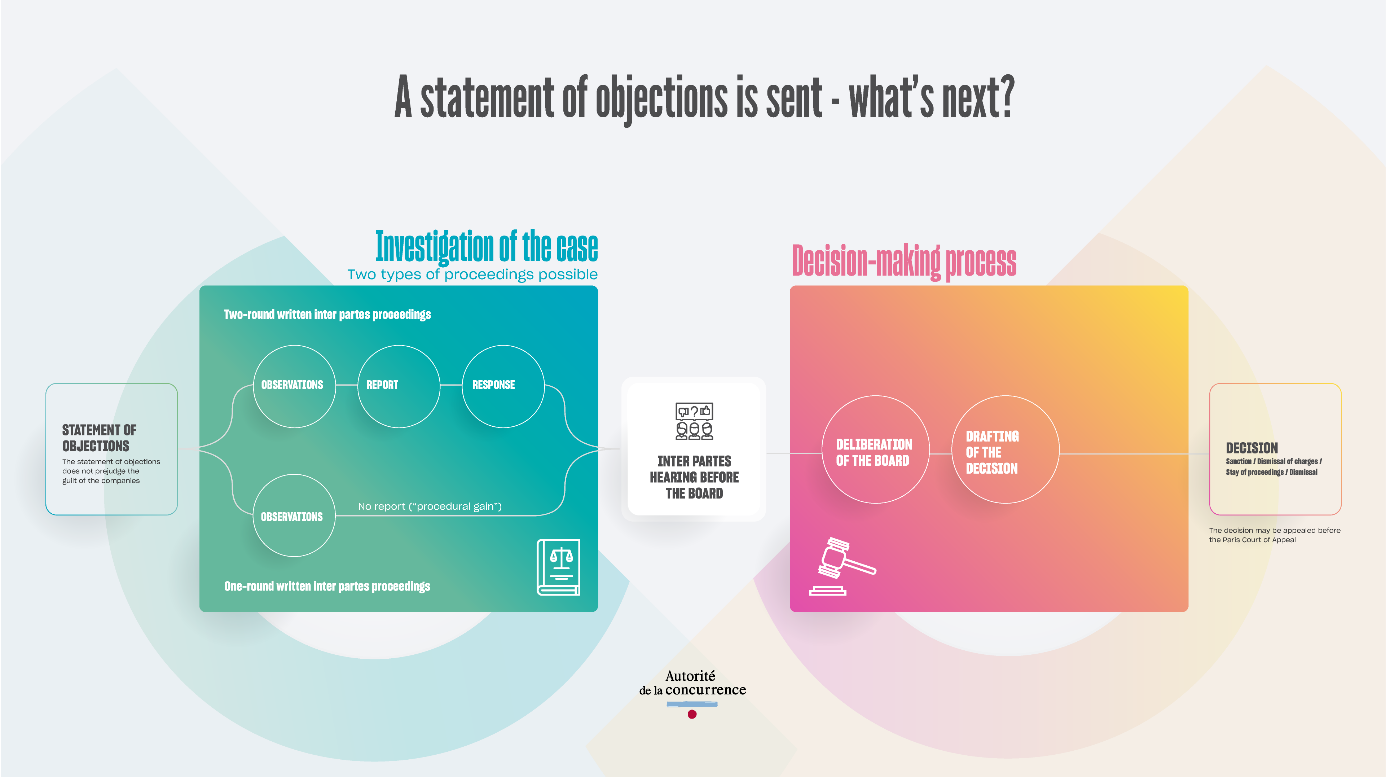
The sending of the statement of objections is an investigative act that opens inter partes proceedings and enables the parties to exercise their rights of defence. It does not prejudge the guilt of the entities that have received the statement of objections. Only an inter partes investigation, respecting the rights of defence of the parties concerned, will enable the Board to determine, after exchanging written observations and following an oral hearing, whether the objections are well-founded.
The Autorité de la concurrence will not comment further, either on the entity concerned or on the practices in question.
The Autorité is authorised to communicate on statements of objections
Article L. 463-6 of the French Commercial Code (Code de commerce) provides that the Autorité may publish brief information relating to the actions that it takes with a view to the investigation, observation or sanction of anticompetitive practices, when the publication of this information is carried out in the public interest and in strict compliance with the presumption of innocence of the companies or associations of companies concerned.
This possibility results from an amendment to the French Commercial Code by ordinance (ordonnance) 2021-649 of 26 May 2021 relating to the transposition of Directive (EU) 2019/1 of the European Parliament and of the Council of 11 December 2018 aiming to empower the competition authorities of the Member States to be more effective enforcers and to ensure the proper functioning of the internal market.
Other European competition authorities use this option, such as the European Commission and the Austrian, Belgian, Dutch, Greek and Portuguese competition authorities.
What is a statement of objections?
The statement of objections is the “indictment”. This document is sent by the Autorité’s Investigation Services to companies or organisations suspected of having implemented anticompetitive practices (mainly anticompetitive agreements and abuse of dominant position).
This investigative act opens inter partes proceedings before the Autorité, during which the parties can make any legal or factual observations, in accordance with their rights of defence.
Written inter partes proceedings were reformed by the law of 3 December 2020, known as the “DDADUE Act”.
Now, depending on the characteristics of the case, there may be one or two written inter partes rounds.
In all cases, the case gives rise to an oral hearing before the Board, during which the parties, the Government Commissioner and, where applicable, witnesses or experts are heard.
A statement of objections does not prejudge in any way the guilt of the companies or organisations concerned. It is only at the end of the investigation, and following a hearing, that the Board independently determines whether the objections are well-founded.
Contact(s)